
سلام. در دوره متفاوتي از عمر بشر به سر مي بريم... براي بهره وري و ايجاد تمايز، پيشنهاد مي كنم بعد از مطالعه دقيق متن مقاله و توجه به نمونه پرامپتهاي كوچينگ هوشمند و تركيب آن با خلاقيتهاي فردي خودتان (جهت تاثيرگذاري بهتر در زندگي شخصي و سازماني)، مقاله انگليسي توسعه يافته با رويكرد چرخه باباي هوشمند و هوش تركيبي انسان و هوش مصنوعي را كه متفاوت و مكمل متن فارسي است در انتهاي مقاله فارسي مطالعه فرماييد:
مقاله اول:
چکیده:
عصر کار تیمی دیگر محدود به تعاملات انسانی نیست. امروزه، سازمانها و تیمهاي موفق مي بايست از همکاری متقابل و مشاركتي متخصصان انسانی و عاملهاي هوشمند (AI Agents) تشکیل شوند. در این نوگرایی دیجیتال، مفاهیم سنتی مدیریت بهره وری و كيفيت کارایی خود را از دست مي دهند مگر اينكه از كاربرد هوشمندانه هوش تركيبي و سازماندهي مناسب كار تيمي انسان و هوش مصنوعي بهره مند شوند. این مقاله یک چارچوب استراتژیک برای «مدیریت هوشمند كيفيت و بهره وری» ارائه میدهد که بر پایه «دوسوتوانی سازمانی» (Organizational Ambidexterity)، مدل بلوغ پنج مرحله ای و چرخه بهبود نوین «بابای هوشمند» (Smart BABA) استوار است. اين مقاله، با معرفی مفاهیمی همچون اسمارت کایزن (Smart Kaizen) و ارائه نمونه پرامپتهای عملی برای کوچینگ هوشمند، نقشه راهی عملياتي برای حل مسايل سازمانها با رويكرد همزیستی و هم افزایی انسان و هوش مصنوعی براي امروز و چشم انداز صنعت نسل پنجم ترسیم مینمايد.
مقدمه: فراتر از اتوماسیون، وارد عصر همکاری (Collaboration) با هوش مصنوعي شویم
دهه هاست که اتوماسیون، وظایف تکراری و مبتنی بر قوانین را از دوش انسانها برداشته است. اما پارادایم جدیدی در حال شکل گیری است: کار تیمی انسان و هوش مصنوعی (Human-AI Teaming). در این پارادایم، هوش مصنوعی دیگر صرفاً یک ابزار نیست، بلکه یک هم تیم، یک دستیار هوشمند یا حتی یک رهبر تیم مجازی است که میتواند تحلیل کند، پیشبینی کند و مستقلاً اقدام کند. این تغییر بنیادین، نیازمند بازاندیشی در اصول مديريت كيفيت، TQM، مدیریت بهره وری و تعالي سازماني است. سوال کلیدی این نیست: "چگونه کارها را سریعتر انجام دهیم؟" بلکه این است: "چگونه با کمک هوش مصنوعی، کارهای درست تر و هوشمندانه تری انجام دهیم و به طور مداوم از این همکاری بیاموزیم؟"
پاسخ در توسعه مباني و مفاهيم «دوسوتوانی سازمانی» نهفته است. سازمانهای موفق آینده، آنهایی هستند که میتوانند همزمان بر بهره برداری (Exploitation) از فرآیندهای موجود و اکتشاف (Exploration) فرصتهای نوین با کمک هوش مصنوعی تمرکز کنند. این سازمانها، چابک، یادگیرنده و فوق العاده بهره ور هستند.
موتور محرک جدید: هوشمندي عامل محور (Agentic AI) و سیستمهای چندعامله (Multiagent Systems)
قلب تپنده این تحول، Agentic AI است. برخلاف مدلهای زبانی سنتی که صرفاً به ورودی واکنش نشان میدهند، عاملهاي هوشمند میتوانند اهداف پیچیده را درک کرده، برای رسیدن به آنها برنامه ریزی کنند و با استفاده از ابزارهای دیجیتال، اقدامات لازم را انجام دهند. تصور کنید تیمی از این عاملهاي هوشمند که در یک سیستم چندعامله (Multiagent System) سازماندهی شده اند، مانند یک ارکستر سمفونیک هوشمند عمل میکنند: یکی مسئول تحلیل بازار، دیگری بهینه سازی زنجیره تامین و سومی مدیریت ارتباط با مشتریان. این عاملان به طور خودکار با هم هماهنگ شده و برای رسیدن به یک هدف مشترک (مثلاً افزایش فروش) با یکدیگر همکاری میکنند.
نقشه راه استراتژیک: مدل بلوغ پنج مرحله ای بهره وری هوشمند
برای حرکت از وضعیت فعلی به این آینده متمايز و هیجان انگیز، سازمانها باید یک نقشه راه شفاف داشته باشند. مدل بلوغ زیر، پنج مرحله کلیدی این سفر را تشریح میکند:
مرحله ۱: آگاهی و آزمایش (Awareness & Experimentation):
* ویژگیها: استفاده پراکنده و فردی از ابزارهای مولد هوش مصنوعی مولد (همچون ChatGPT، Grok، DeepSeek) برای کارهای ساده و عدم وجود استراتژی مشخص.
* اقدام کلیدی: برگزاری کارگاه های آموزشی و تشویق کارکنان به آزمایش ابزارها برای افزایش بهره وری شخصی.
مرحله ۲: یکپارچه سازی و استانداردسازی (Integration & Standardization):
* ویژگیها: انتخاب مجموعه ای از ابزارهای AI تایید شده و یکپارچه سازی آنها با سیستمهای اصلی (مانند KM ، CRM یا ERP). ایجاد دستورالعملهای اولیه استفاده.
* اقدام کلیدی: ایجاد یک "بازارگاه داخلی ابزارهای هوش مصنوعی" و تعریف پروتکلهای امنیتی.
مرحله ۳: بهینه سازی و همکاری (Optimization & Collaboration):
* ویژگیها: تیمهای انسانی و AI شروع به کار رسمی با یکدیگر میکنند. استفاده از مدلهای زبانی خاص دامنه (Domain-Specific Language Models - DSLMs) برای کارهای تخصصی (مثلاً DSLM حقوقی برای تیم حقوقی).
* اقدام کلیدی: تشکیل تیمهای هیبریدی (انسان+AI) برای پروژه های مشخص و تعریف شاخصهای کلیدی عملکرد (KPIs) مشترک.
مرحله ۴: هوشمندی و پیش فعالی (Intelligence & Proactivity):
* ویژگیها: استفاده گسترده از سیستمهای چندعامله (Multiagent Systems) برای خودکارسازی فرآیندهای بین بخشی و توسعه AI-CFT ها. هوش مصنوعی به طور پیشگیرانه مشکلات را شناسایی و راه حل پیشنهاد میدهد.
* اقدام کلیدی: سرمایه گذاری روی پلتفرمهای توسعه بومی هوش مصنوعی (AI-Native Development Platforms) که امکان ساخت و سفارشی سازی عاملان هوشمند داخلی را فراهم میکنند.
مرحله ۵: همزیستی و هم فرگشتی (Symbiosis & Co-evolution):
* ویژگیها: سازمان به یک "ارگانیسم هوشمند" تبدیل میشود. مرز بین انسان و AI در کار تیمی کاملاً محو میشود. هوش مصنوعی فیزیکی (Physical AI) (رباتها و سنسورهای هوشمند) به طور یکپارچه فرآیندهای فیزیکی و دیجیتال را مدیریت میکنند.
* اقدام کلیدی: تمرکز بر یادگیری مداوم و تطبیق استراتژی سازمان بر اساس بینشهای حاصل از همزیستی با هوش مصنوعی.
*** موتور عملیاتی: اسمارت کایزن و چرخه بهبود «بابای هوشمند» (Smart BABA) ***
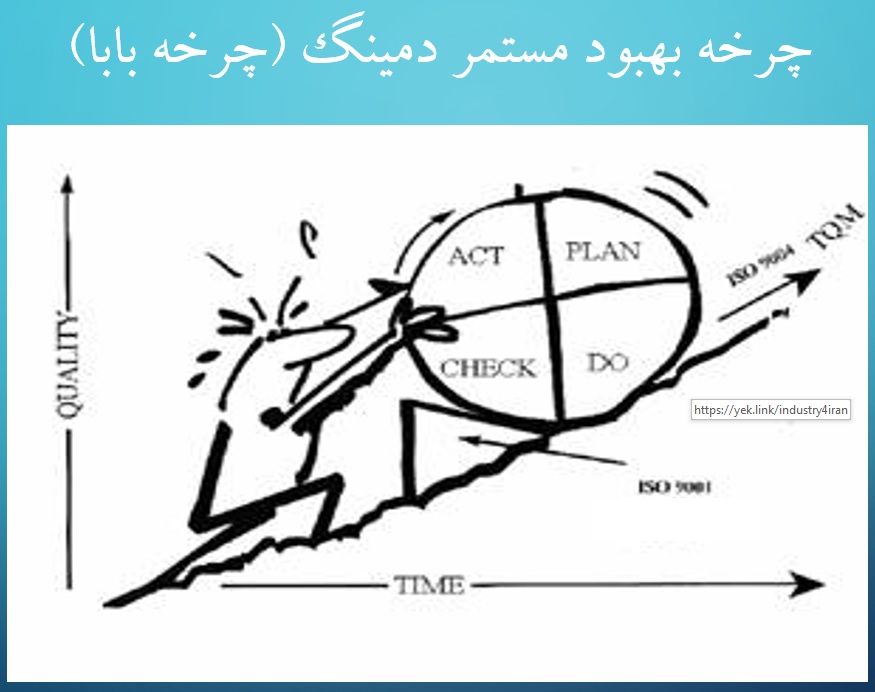
مدیریت كيفيت و بهره وری سنتی بر اساس چرخه بهبود مستمر دمينگ يا PDCA (Plan-Do-Check-Act) استوار بود (كه سالهاست در شركتها و سازمانهاي ايراني از آن با نام فارسي چرخه بابا ياد مي كنم: برنامه ريزي، انجام، بررسي، اقدام اصلاحي). در عصر هوش مصنوعی، این چرخه براي اثربخشي و بهره وري بالاتر، باید به SmartPDCA و فراتر از آن تکامل یابد. در اين مقاله، این چرخه تکامل یافته را «چرخه بابای هوشمند» (Smart BABA) مینامیم که در قلب آن، اسمارت کایزن (Smart Kaizen) قرار دارد؛ یعنی ايجاد بهبودهای مستمر و کوچک که با سرعت و دقت فوق العاده هوش مصنوعی تسریع میشوند.
BABA مخفف چیست؟
B - برنامه (Barnameh): برنامه ریزی هوشمند با پیشبینی و سناریوسازی با كمك هوش تركيبي انسان و هوش مصنوعي.
A - انجام (Anjam): اجرای هماهنگ با کمک تيم هاي تركيبي انساني و عاملهاي هوشمند.
B - بررسی (Barresi): پایش و تحلیل داده های واقعی (حتی فیزیکی) برای بازخورد فوری.
A - آینده نگري (Ayandeh): اقدامات آینده نگرانه مبتنی بر یادگیری و پیشبینی.
در ادامه، برای هر فاز از این چرخه، نمونه پرامپتهای بهینه برای کوچینگ هوشمند ارائه میشود.
#چرخه_بهبود_هوشمندانه بابا (Smart BABA) و پرامپتهای کوچینگ هوشمند
#### فاز اول: B - برنامه (Barnameh) | برنامه ریزی هوشمند
در این فاز، ما از هوش مصنوعی برای تحلیل عمیقتر وضعیت موجود، شناسایی فرصتهای پنهان و تدوین برنامه هایی پویا و مبتنی بر داده استفاده میکنیم.
نمونه پرامپت کوچینگ هوشمند اين فاز (جهت حل يك مسئله شخصی و رشد فردي):
> Prompt:
> "Act as a smart personal development coach. I'm facing this challenge:
[شرح دقیق چالش شخصی خود را اینجا بنویسید، مثلا: میخواهم یک مهارت جدید مثل برنامه نویسی پایتون را در ۳ ماه یاد بگیرم اما در مدیریت زمان ضعیف هستم]. My goal is [هدف خود را اینجا بنویسید، مثلا: یادگیری اصول پایتون برای ساخت یک پروژه ساده].
Please analyze my situation using a structured framework. Ask me clarifying questions to understand my current knowledge, available time per week, and learning style. Then, generate a detailed, adaptive weekly plan for the next 3 months. The plan should include specific milestones, recommended resources (courses, books, projects), and strategies to overcome potential procrastination. Also, incorporate a 'smart review' point every two weeks where I can assess my progress and you can suggest adjustments."
نمونه پرامپت کوچینگ هوشمند اين فاز (جهت حل يك مسئله سازمانی):
> Prompt:
> "Act as a strategic AI business consultant. Our team is responsible for
[وظیفه تیم خود را شرح دهید، مثلا: بهینه سازی کمپینهای بازاریابی دیجیتال]. We are facing this challenge: [چالش اصلی را شرح دهید، مثلا: نرخ تبدیل (Conversion Rate) کمپینهای ما در سه ماه گذشته ۱۵ درصد کاهش یافته است].
Our main KPI is [شاخص کلیدی عملکرد خود را ذکر کنید، مثلا: نرخ بازگشت سرمایه (ROI)].
Using a domain-specific model for marketing, analyze the potential root causes for this drop. Propose a data-driven plan for the next quarter, including 3-4 specific hypotheses to test (e.g., A/B testing new ad copy, targeting a different demographic segment), the required data we need to collect, and the AI tools or multi-agent systems we could use to automate parts of this process."
---
#### فاز دوم: A - انجام (Anjam) | اجرای هوشمند و خودکار
این فاز درباره اجرای برنامه طراحي شده در فاز قبل است، فقط با سرعت و دقتی که از طریق همکاری انسان و AI ميسر است. پلتفرمهای توسعه بومی هوش مصنوعی (AI-Native Platforms) به تیمها اجازه میدهند تا بدون نیاز به کدنویسی پیچیده، گردشکارهای هوشمند بسازند و عاملان AI را برای انجام وظایف مشخص ماموریت دهی کنند. استفاده هوشمندانه از اين پلتفرمها در اين فاز مي تواند به ارتقاي بهره وري كمك نمايد.
نمونه پرامپت کوچینگ هوشمند اين فاز (مسئله شخصی):
> Prompt:
> "Act as a productivity automation expert. Based on the learning plan we created for
[مهارت مورد نظر], help me design an automated execution system. I want you to:
> 1. Draft a template for my daily study log that I can fill out.
> 2. Suggest specific AI tools (e.g., task managers with AI features, flashcard apps with spaced repetition algorithms) that can help me stick to the schedule.
> 3. Generate a 'smart accountability prompt' that I can use with an AI every Friday. This prompt should allow me to paste my weekly log and get feedback on my consistency, suggestions for the next week, and a motivational summary of my accomplishments."
نمونه پرامپت کوچینگ هوشمند اين فاز (مسئله سازمانی):
> Prompt:
> "Act as an AI workflow architect. For the marketing plan we outlined to increase conversion rates, design a multi-agent system workflow. Describe the roles of at least three AI agents:
> 1. Agent 1 (Data Analyst): What data should it pull from our analytics platforms (e.g., Google Analytics, CRM) and how often?
> 2. Agent 2 (Content Creator): How would it use the insights from Agent 1 to generate variations of ad copy or email subject lines?
> 3. Agent 3 (Campaign Orchestrator): How would it use the outputs from Agent 2 to set up and run A/B tests on platforms like Google Ads or Meta?
> Provide a step-by-step description of how these agents would collaborate on an AI-native development platform to execute our strategy."
---
فاز سوم: B - بررسی (Barresi) | تحلیل و بازخورد هوشمند
بررسی در چرخه بابا صرفاً یک چک لیست ساده نیست. این فاز شامل تحلیل داده های حاصل از اجرا، شناسایی انحرافات محتمل از برنامه و درک "چرا"ی پشت نتایج است. اینجاست که هوش مصنوعی فیزیکی (Physical AI) نیز ميتواند وارد چرخه شود؛ برای مثال، اطلاعات حاصله از دستبند هوشمند و يا سنسورهای هوشمند در یک کارخانه كه میتوانند داده های عملکرد را برای تحلیل در لحظه و بررسي و تصميم گيري داده محور ارسال کنند. شايان ذكر است كه تحليلهاي هوشمند Data Analytics مطابق مدل بلوغ تحليل داده هاي گارتنر، مي توانند در فرآيندهاي پيشرفته شش سيگماي هوشمند و يا چرخه باباي هوشمند (و يا ساير رويكردهاي حل مساله در نظام تعالي سازمان، بسته به سطح مساله مورد بررسي) استفاده شده و خلق ارزش نمايند. دقت كنيد كه اگر اين سنسورها از قبل در فرآيند يكپارچه نشده اند، اجراي كامل اين مرحله، نيازمند يك چرخه بهبود مجزا براي طرح ريزي و اجراي نقشه راه هوشمندسازي در فرآيند مورد نظر مي باشد. در مقاله حاضر تمركز بر معرفي فرآيند چرخه بهبود SmartBABA مي باشد ولي مشابه همين امر در حل مسايل سازماني با رويكردهاي پيشرفته در SmartDMAIC مبتني بر تركيب فرآيند حل مساله شش سيگما و قابليتهاي هوش مصنوعي نيز امكان پذير مي باشد.
نمونه پرامپت کوچینگ هوشمند اين فاز (مسئله شخصی):
Prompt:
"Act as a data-driven learning coach. I have completed the first two weeks of my learning plan for [مهارت مورد نظر]. Here is my log data: [داده های لاگ خود را اینجا Paste کنید، مثلا: ساعات مطالعه هر روز، مباحث پوشش داده شده، نمره کوئیزها، چالشها]. Please perform a 'smart check' on my progress. Analyze my patterns of productivity, identify potential bottlenecks or topics where I'm struggling, and compare my actual progress against the planned milestones. Provide actionable insights and specific adjustments to my plan for the upcoming week to maximize my learning efficiency."
نمونه پرامپت کوچینگ هوشمند اين فاز (مسئله سازمانی):
Prompt:
"Act as a business intelligence analyst. Our A/B test on the new ad copy has been running for one week. Here is the performance data: [داده های عملکرد کمپین را اینجا وارد کنید، مثلا: Impressions, Clicks, Conversions, Cost per Conversion for each variation]. Also, here is some qualitative feedback from our sales team: [بازخوردهای کیفی تیم فروش را اینجا بنویسید]. Conduct a comprehensive 'check' phase. Analyze the statistical significance of the results. Go beyond the surface numbers and provide hypotheses on why one variation performed better. Suggest what we should learn from this test and what data we should incorporate into our next planning cycle (the next 'B' in BABA)."
فاز چهارم: A - آینده (Ayandeh) | اقدامات آینده نگرانه
این فاز، قدرتمندترین بخش چرخه باباي هوشمند است. "Act" در PDCA يا همان چرخه بهبود مستمر سنتي بابا بطور خلاصه به معنای "اقدام اصلاحي" بود، اما فاز "Ayandeh" بسيار فراتر از آن طراحي شده و به معنای "آینده نگری" و "اقدام پیشدستانه" است. در اینجا، ما از یادگیری حاصل از فاز بررسی برای پیش بینی روندهای آینده، شبیه سازی سناریوها و به روز رسانی استراتژیهای بلندمدت (در سطح فردي و سازماني) در راستاي حل ريشه اي مسائل استفاده میکنیم.
نمونه پرامپت کوچینگ هوشمند اين فاز (مسئله شخصی):
Prompt:
"Act as a strategic career foresight coach. Based on my progress in learning
[مهارت مورد نظر]
and the current market trends, help me with the 'Ayandeh' phase in smart baba methodolgy. First, analyze how this new skill will likely evolve in the next 2-3 years. What adjacent skills should I consider learning next to create a unique and valuable skill set? Second, help me simulate a future scenario. For example: 'Imagine it's 2026 and I'm applying for a [سمت شغلی ایده آل] role. Based on my current learning path, what are my strengths and weaknesses? What projects should I undertake in the next 6 months to build a compelling portfolio for that future role?' Provide a long-term, adaptive roadmap."
نمونه پرامپت کوچینگ هوشمند اين فاز (مسئله سازمانی):
Prompt:
"Act as a corporate strategist and futurist. We have analyzed the results of our marketing campaign optimization. Now, for the 'Ayandeh' phase, I want you to help us think beyond the next quarter. Based on the successful strategies we've identified (e.g., personalized ad copy) and the capabilities of our multi-agent system, forecast two major trends in our industry that we can capitalize on in the next 18 months. For each trend, propose a new, ambitious initiative that would require us to evolve our current AI capabilities. Describe the potential ROI, the required resources, and the first three steps we should take to begin exploring this future opportunity now."
مدیریت هوشمند بهره وری و كيفيت دیگر یک انتخاب نیست، یک ضرورت برای بقا و رشد است. سازمانهایی که بتوانند با كاربرد رويكردها و چارچوبهای نوين مانند چرخه بابای هوشمند (Smart BABA)، پرورش دوسوتوانی سازمانی و مديريت دانش نسل پنجم، از همکاری و هم افزایی انسانها و هوش مصنوعی (بويژه هم آفريني كاركنان و مشتريان خود با عاملهاي هوشمند) بهره برداری هوشمندانه اي داشته باشند، نه تنها شاخصهاي كليدي كيفيت، بهره وری و رضايتمندي مشتريان و ذينفعان خود را به شکل چشمگیری ارتقا خواهند داد، بلکه به سازمانهایی یادگیرنده، چابک و آینده نگر تبدیل میشوند که میتوانند در دنیای پرشتاب امروز پیشرو و راهبر باشند. آینده متعلق به کسانی است که میتوانند با هوش مصنوعی همگام باشند، نه اينكه در مقابل آن بایستند...
منابع و مراجع:
O'Reilly, C. A., & Tushman, M. L. (2013). Organizational Ambidexterity: Past, Present, and Future. Academy of Management Perspectives, 27(4), 324-338.
(این مرجع برای مفهوم دوسوتوانی سازمانی کلاسیک و بسیار معتبر است).
McKinsey Global Institute. (2023). The economic potential of generative AI: The next productivity frontier.
(گزارشهای مکنزی منابع معتبری برای درک اثرات اقتصادی هوش مصنوعی هستند).
Stone, P., & Kraus, S. (2022). The Present and Future of Multiagent Systems. Communications of the ACM, 65(5), 56-65.
(این مقاله برای درک عمیقتر سیستمهای چندعامله مناسب است).
Huang, M. H., & Rust, R. T. (2021). A strategic framework for artificial intelligence in marketing. Journal of the Academy of Marketing Science, 49(1), 30-50.
(این مقاله چارچوبهای استراتژیک استفاده از AI در یک حوزه تخصصی را نشان میدهد).
Brynjolfsson, E., Rock, D., & Syverson, C. (2023). Generative AI at Work. NBER Working Paper No. 31125.
(مقالات علمی دفتر تحقیقات اقتصادی ملی (NBER) از منابع معتبر برای تحلیلهای اقتصادی و مدیریتی هستند).
نكات تكميلي:
بخشهاي فارسي و انگليسي در اين صفحه مكمل يكديگر هستند. جهت رفرنس به اين مقالات مي توانيد از عناوين زير استفاده نماييد:
هم افزایی انسان و هوش مصنوعی برای مدیریت كيفيت و بهره وری هوشمند در سازمانهای دوسوتوان نسل پنجم. صفحه ويرگول دكتر حبيب كراري، 1404.
Karrari, Habib, (2025). Human-AI synergy for intelligent productivity management in fifth-generation ambidextrous organizations. Virgool.io.
و لينك صفحه را ارسال فرماييد. با آرزوي موفقيت
جهت اطلاعات تكميلي و تازه هاي هوش مصنوعي، صفحات دكتر حبيب كراري در لينكدين و تلگرام را در لينك ارائه شده در تصوير دنبال كنيد و يا دوره TQM دكتر كراري را در گوگل جستجو بفرماييد.
مقاله دوم: مقاله انگليسي توسعه يافته با رويكرد چرخه باباي هوشمند و هوش تركيبي انسان و هوش مصنوعي:
Abstract
The age of teamwork is no longer confined to human interactions. Today, successful organizations and teams must be formed from the mutual and collaborative partnership of human experts and intelligent agents (Agentic AI). In this digital innovation, traditional concepts of productivity management lose their efficacy unless they leverage the intelligent application of composite AI and the proper organization of human-AI teamwork. This paper presents a strategic framework for "intelligent productivity and quality management" founded on organizational ambidexterity, a five-stage maturity model, and the novel "Smart BABA" improvement cycle. By introducing concepts such as Smart Kaizen and providing practical prompts for smart coaching, this article outlines an operational roadmap for organizations to achieve symbiosis and synergy with AI for the challenges of today and the horizon of Industry 5.0 by 2030.
Keywords
Industry 5.0, Organizational Ambidexterity, Intelligent Productivity, Quality Management, Human-AI Synergy, Agentic AI, Composite AI, Smart Kaizen, Smart BABA.
1. Introduction: Beyond Automation, Towards Value Co-Creation
The Fifth Industrial Revolution (Industry 5.0) marks a philosophical pivot from the efficiency-driven automation of its predecessor. As defined by the European Commission, Industry 5.0 champions a human-centric, sustainable, and resilient industrial future. This is not merely a technological upgrade; it's a reorientation that places human well-being and societal value at the core of innovation. In this new paradigm, the objective transcends simple cost reduction. It is about co-creating superior value with customers and employees, which intrinsically links productivity with quality.
This evolution renders traditional management models obsolete. The future belongs to organizations that master the Productivity-Quality Duality: the ability to simultaneously maximize output efficiency and elevate the quality of products, services, and experiences. The key to unlocking this duality lies in the synergy between human creativity and the analytical power of composite AI—the strategic combination of various AI techniques (e.g., machine learning, natural language processing, computer vision) to solve complex problems. This paper provides a strategic and operational framework for building this synergy, transforming organizations into intelligent, ambidextrous entities ready for the challenges of 2030.
2. The Technological Bedrock: 5G, IoT, and the Nervous System of Industry 5.0
The vision of human-AI collaboration is built on a foundation of hyper-connectivity. Fifth-generation (5G) networks and the Industrial Internet of Things (IIoT) form the central nervous system of the modern enterprise. 5G’s defining characteristics—eMBB (high bandwidth), URLLC (ultra-reliable low-latency communication), and mMTC (massive machine connectivity)—are what make real-time, large-scale human-machine collaboration possible.
URLLC is critical not only for controlling robots but for enabling real-time quality assurance systems that can halt a process the instant a defect is detected, preventing waste and ensuring product integrity.
mMTC allows for the deployment of vast sensor networks that capture granular data across the entire value chain, from raw material sourcing to customer usage, providing a holistic view for both productivity and quality analytics.
eMBB facilitates the seamless flow of high-definition data, enabling remote experts to collaborate with on-site AI systems through augmented reality (AR) for complex repairs or quality inspections.
3. The Core of Transformation: The Ambidextrous Organization and the Productivity-Quality Duality
To thrive, organizations must cultivate organizational ambidexterity—the ability to simultaneously exploit their current capabilities and explore future opportunities. In the context of Industry 5.0, we can frame this duality as the Productivity-Quality Duality:
Exploitation (Productivity Focus): This involves optimizing existing processes, reducing waste, and increasing operational efficiency. It is about refining the "how" of current operations. AI excels here by analyzing data to identify bottlenecks, predict maintenance needs (Predictive Maintenance), and automate repetitive tasks, thereby boosting productivity.
Exploration (Quality & Innovation Focus): This involves experimenting with new ideas, developing breakthrough products, and enhancing customer value. It is about redefining the "what" and "why" of the business. Here, AI acts as a creative partner. Composite AI can analyze market trends, customer feedback, and scientific literature to identify unmet needs, simulate new product designs, and personalize customer experiences at scale, thus driving quality and innovation.
An ambidextrous organization does not choose between these two; it masters both, creating a dynamic equilibrium where gains in productivity fund exploration, and innovations in quality open new markets for productive growth.
Strategic Roadmap: A Five-Stage Maturity Model
Progressing towards a fully ambidextrous, human-AI synergistic organization is a journey. The following five-stage model provides a roadmap, with an explicit focus on the evolution of quality management.
Maturity Stages and Key Technologies:
1- Awareness & Automation: Automating isolated, repetitive tasks. Reactive Quality Control (detecting defects after they occur). RPA, Basic Sensors
2- Integration & Connection: Connecting systems for end-to-end process visibility. Data-Driven Quality Assurance (SQC, SPC). IIoT, Cloud Platforms, Centralized Data Lakes
3- Collaboration & Optimization: Forming human-AI teams to solve complex problems. Predictive Quality Management (predicting defects before they happen). Agentic AI, Composite AI, Decision Support Systems
4- Intelligence & Proactivity: Using Multiagent Systems for autonomous process optimization. Autonomous Quality Optimization (AI self-adjusts parameters to maintain quality). Multiagent Systems, Digital Twins
5- Symbiosis & Co-evolution: The organization is a self-optimizing, adaptive system. Co-created Adaptive Quality (quality is defined and improved with customers in real-time). AI-Native Platforms, Physical AI
Traditional improvement methodologies like Lean and Kaizen are powerful but are often limited by human speed and cognitive capacity. Smart Kaizen reimagines these principles for the AI era, representing continuous, small improvements that are identified, implemented, and verified at machine speed. The engine driving Smart Kaizen is the Smart BABA cycle, an evolution of the classic PDCA, designed for a world of human-AI collaboration.
BABA stands for:
B - Barameh (Plan): Intelligent planning using predictive analytics and scenario modeling.
A - Anjam (Do): Automated and coordinated execution by human-AI teams.
B - Barresi (Check): Real-time monitoring and analysis of performance and quality data.
A - Ayandeh (Act/Foresight): Proactive, future-oriented actions based on deep learning and foresight.
The Smart BABA Cycle with Smart Coaching Prompts
Phase 1: B - Barameh (Plan) | Intelligent Planning
This phase uses composite AI to analyze the current state, identify root causes, and simulate future scenarios to create a robust, data-driven plan that balances productivity and quality goals.
Smart Coaching Prompt (Organizational Problem):
"Act as a strategic AI consultant specializing in operational excellence. Our production line for [Product Name] is facing a challenge: [Describe the challenge, e.g., a 10% decrease in yield and a 5% increase in customer-reported defects over the last month]. Our primary goals are to [Goal 1, e.g., increase yield by 8%] and [Goal 2, e.g., reduce critical defects by 20%]. Using a composite AI approach, analyze potential root causes from our process data, maintenance logs, and quality control reports. Propose a detailed plan for the next quarter that includes 3-4 specific hypotheses to test, the data we need to collect, and how we can use a multi-agent system to automate data collection and preliminary analysis."
Phase 2: A - Anjam (Do) | Intelligent Execution
This is where the plan is put into action through a seamless collaboration between human oversight and automated AI agents.
Smart Coaching Prompt (Organizational Problem):
"Act as an AI workflow architect. Based on the plan to improve yield and quality for [Product Name], design a human-AI collaborative workflow. Describe the roles of:
The Human Team Lead: What key decisions and oversight will they provide?
The Data Collection Agent: How will it gather real-time data from sensors and quality stations?
The Process Adjustment Agent: What parameters will it be authorized to adjust within predefined safety limits to optimize the process?
Outline the daily interaction protocol between the human lead and the AI agents."
Phase 3: B - Barresi (Check) | Intelligent Analysis
This phase moves beyond simple reporting to deep, AI-driven analysis of results, connecting actions to outcomes on both productivity and quality dimensions.
Smart Coaching Prompt (Organizational Problem):
"Act as a business intelligence analyst with expertise in quality science. We have executed the new process parameters for one week. Here is the performance data: [Provide data on yield, throughput, cycle time, and any relevant quality data (e.g., defect rates, customer satisfaction scores)]. Conduct a comprehensive 'Check' analysis. Determine the statistical significance of the changes. Correlate specific process adjustments with changes in yield and quality. Provide a clear verdict on whether our hypotheses were correct and what unexpected insights the data reveals."
Phase 4: A - Ayandeh (Act & Foresight) | Proactive Future-Proofing
This is the most forward-looking phase, using the learnings from the BABA cycle to not just correct, but to anticipate and strategically evolve.
Smart Coaching Prompt (Organizational Problem):
"Act as a corporate strategist and futurist. Based on our successful improvement in [Product Name]'s production line, help us with the 'Ayandeh' phase. How can we scale this success to other production lines? Furthermore, forecast two major technological or market trends in our industry by 2030 that could impact our approach to productivity and quality. For each trend, propose a new R&D initiative that would require us to evolve our current AI and human-AI collaboration capabilities to maintain our leadership position."
5. The Ultimate Frontier: Autonomous Organizations and the Human-AI DAO
The trajectory of human-AI synergy points towards an even more radical evolution in organizational structure: the rise of Decentralized Autonomous Organizations (DAOs). By 2030, we are poised to witness a significant portion of digitally-native and agile organizations being managed, at least in part, through autonomous principles encoded in blockchain-based smart contracts. In a Human-AI DAO, the traditional corporate hierarchy is replaced by a decentralized governance model where rules are transparent, execution is automated, and trust is established by code rather than by a central authority. In this paradigm, ambidexterity is built into the protocol. The "exploitation" functions—such as treasury management, operational payments, and executing routine tasks—are handled autonomously by AI agents interacting with smart contracts. The "exploration" functions—strategic direction, major investments, and ethical oversight—are governed by the human community (and AI advisors) through a transparent voting system. The Smart BABA cycle becomes the continuous, data-driven heartbeat of the organization, with proposals (Plan), automated execution (Do), on-chain performance verification (Check), and community-driven strategic adjustments (Act) all occurring in a perpetual, self-improving loop. This redefines human-centricity; humans are not cogs in a machine but strategic directors, creative visionaries, and ethical stewards of a living, autonomous economic entity.
6. Conclusion: Leading with Synergy
The journey towards Industry 5.0 is not about choosing between humans and machines, but about mastering their synergy. The organizations that will lead the future are those that embrace the Productivity-Quality Duality by cultivating organizational ambidexterity. By implementing operational frameworks like the Smart BABA cycle and fostering a culture of Smart Kaizen, they can create a continuous loop of improvement where human ingenuity is amplified by AI's power.
This is the blueprint for building resilient, human-centric organizations that don't just adapt to the future but actively shape it. By 2030, the distinction between "digital strategy" and "business strategy" will be obsolete; they will be one and the same, driven by the intelligent, collaborative partnership of humans and AI, evolving into the ultimate frontier of autonomous, human-guided organizations.
References
European Commission. (2021). Industry 5.0: Towards a sustainable, human-centric and resilient European industry. Publications Office of the European Union.
5G-ACIA (5G Alliance for Connected Industries and Automation). (2019). 5G for Connected Industries and Automation. Version 2.0.
O'Reilly, C. A., & Tushman, M. L. (2013). Organizational Ambidexterity: Past, Present, and Future. Academy of Management Perspectives, 27(4), 324-338.
Liao, Y., Deschamps, F., Loures, E. d. F. R., & Ramos, L. F. P. (2017). The paradigm of Quality 4.0: A new frontier in manufacturing. The International Journal of Advanced Manufacturing Technology, 91(9-12), 3781-3792.
McKinsey Global Institute. (2023). The economic potential of generative AI: The next productivity frontier.
Porter, M. E., & Heppelmann, J. E. (2014). How smart, connected products are transforming competition. Harvard Business Review, 92(11), 64–88.
National Economic Council of Japan. (2016). Society 5.0: A Super-smart Society.
Wright, A., & De Filippi, P. (2020). Decentralized Autonomous Organizations: An Overview of the Ecosystem. European Corporate Governance Institute (ECGI) - Law Working Paper. (This provides an academic grounding for the DAO concept).
* جهت دريافت كتاب DAO فارسي و رفرنسهاي تكميلي كامنت بگذاريد و يا صفحه لينكدين دكتر حبيب كراري و كانال تلگرام تازه هاي هوش مصنوعي را دنبال كنيد.
به اميد فردايي بهتر!
آينده از همين امروز شروع مي شود...

