
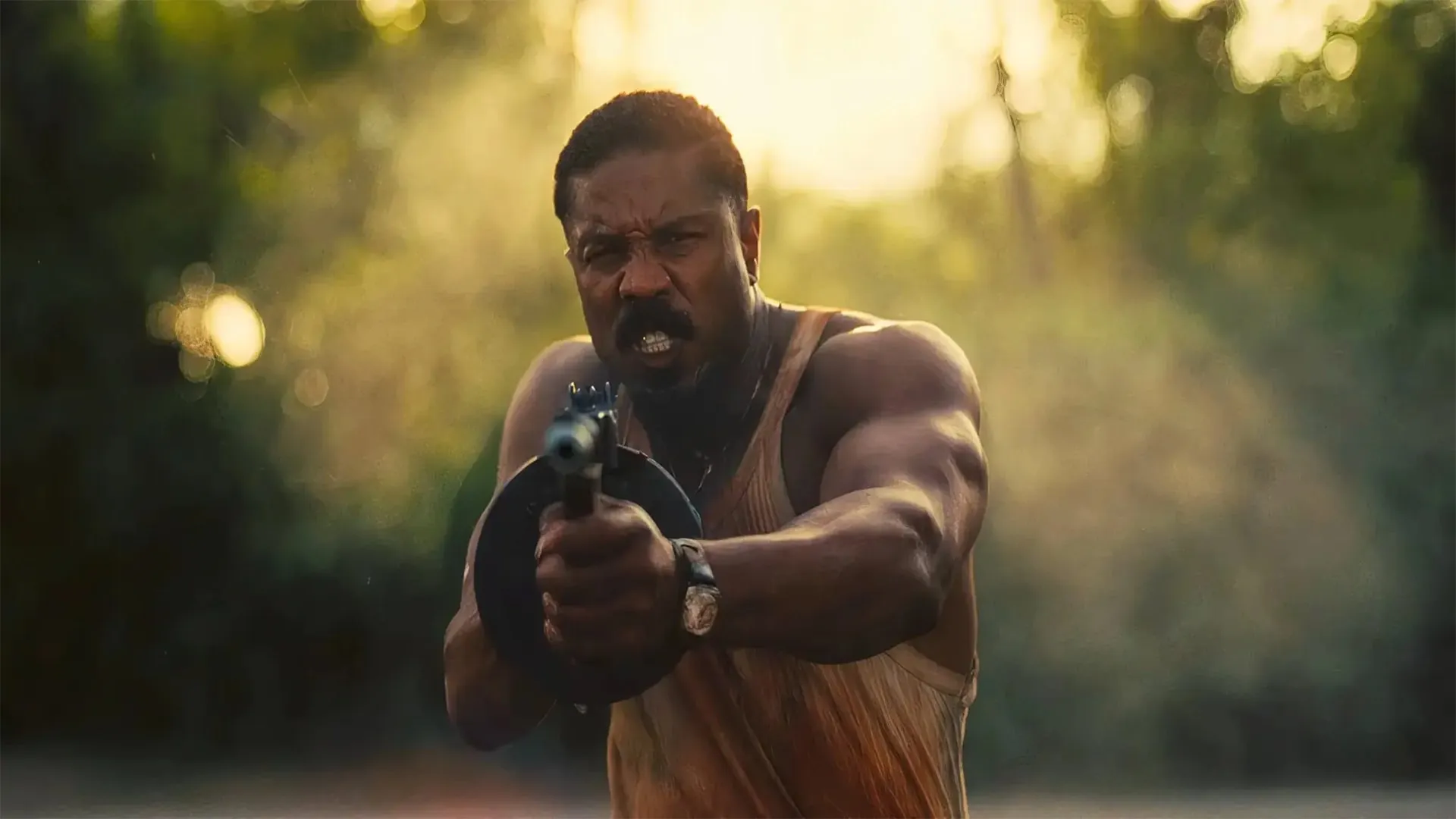
Sinners
Directed by Ryan Coogler
In Sinners, Ryan Coogler reaches into the marrow of American mythology and returns with a cinematic requiem—one part historical allegory, one part lyrical nightmare. This is not merely a film about vampires. It is a meditation on erasure, memory, and the haunting persistence of identity in the face of cultural annihilation.
Set in the segregated American South of the 1930s, the film follows twin brothers—both portrayed with striking nuance by Michael B. Jordan—as they navigate the brutal dichotomies of survival and resistance. These brothers are not mere individuals, but twin aspects of a fractured self: one seeks accommodation, the other insurrection. Jordan doesn’t act so much as inhabit; his dual role never falls into cliché. Instead, he presents a complex internal landscape torn between silence and voice, submission and defiance.
Coogler’s decision to frame the narrative within the horror genre is not an escape from history but a confrontation with it. The vampires here do not glitter or seduce—they colonize. Their hunger is metaphorical: a thirst for cultural erasure, for silencing jazz, language, and legacy. Through them, the film confronts the insidious specter of assimilation, casting it as a form of bloodletting.
The supporting performances are equally evocative. Miles Caton as Semi offers a performance less grounded in dialogue than in presence—his stillness carries the weight of entire generations. His body becomes a site of memory, a vessel of what has been lost and what resists forgetting.
Visually, the film operates like a fever dream. Cinematographer Autumn Durald Arkapaw paints in shadows and stained amber, crafting an atmosphere that is both grounded and surreal. The club scenes, where jazz becomes the film’s pulse, are especially powerful. Here, music is not merely a score—it is the living archive of the oppressed. The film's most breathtaking moment arrives during a single long-take performance in a Black speakeasy, where the camera refuses to cut away, forcing the audience into a direct communion with resistance in its most artful form.
Yes, Sinners is slow-burning. Yes, it demands attentiveness. But these are virtues, not flaws. Coogler has not made a consumable product—he has composed a cinematic invocation. In that invocation, what was buried returns to speak.
Rating (based on Dr. Rahnema’s four parameters):
Narrative and Concept | 9.5/10
Technical and Aesthetic Execution | 9/10
Emotional and Artistic Impact | 9.5/10
Originality and Cultural Legacy | 9/10
Strengths: The film’s fusion of genre with historical depth, its magnetic lead performance, and the symbolic richness of its visual and sonic design elevate it beyond conventional cinema.
Weaknesses: The deliberate pacing and layered symbolism may challenge less attentive viewers, but reward those who endure.
by: Dr. Saeed Rahnema | narrator of unseen frontiers.

