
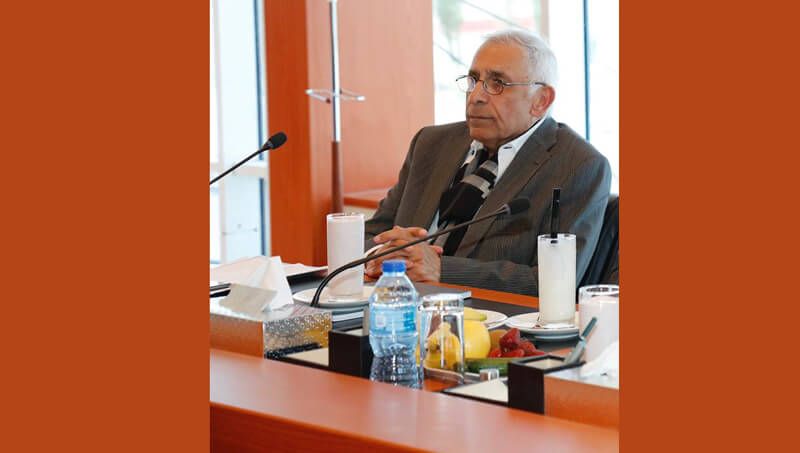
Behrouz Ferdows, outstanding and leading entrepreneur, investor and advisor, Karlsruhe Germany civil engineering graduate, who has been working proactively internationally, has given a speech on emerging markets characteristics and risks/benefits of investing in the markets in developing markets.
Behrouz Ferdows stated that emerging markets or emerging economies also known as developing countries, are nations that are investing in more productive capacity. These countries are moving away from their traditional economies i.e. economies that relied solely on agriculture and export of raw materials. It is a fact that leaders of developing countries seek to create a better quality of life for their people. A free market or mixed economy is what these countries are targeting at while rapidly industrializing.
What are some defining characteristics of emerging markets?
Behrouz Ferdows stated that according to World Bank developing countries are countries with per capita income of $3,995 or less. These emerging markets have lower-than-average per capita income. Rapid growth is the second characteristic followed by low income. Leaders in these economies are minded to undertake the fast track change to a more industrialized economy with the goal of remaining in power and helping their people. Brisk economic growth is the second defining factor of emerging markets. As statistics show in 2019, the most developed countries like Japan, Germany and Mexico enjoyed the economic growth of 3%. Growth in Egypt, Poland, India, and Malaysia was 4% or more while China and Vietnam experienced their economic growth by around 6% to 7%. High volatility which is the result of rapid social change is the third characteristic that can have origins in natural disasters, external price shocks, and domestic policy instability. Behrouz Ferdows stressed that being reliant on agriculture put countries in peril in the time of disasters such as earthquakes, Tsunamis, or droughts. It is evident that such disasters for instance the case with Thailand can provide additional commercial development. Another significant factor to mention is currency swings, which means emerging markets are more susceptible to volatile currency swings as well as commodities swings. The underlying reason is that these countries do not have enough power to influence these changes or movements. Undertaking the essential changes for industrialization, leaders may directly or indirectly cause many population sectors to suffer. Behrouz Ferdows reiterated that these changes and their effects could lead to social unrest and rebellion. The worst case could be investors’ loss when industries become nationalized. Having the potential for growth is the fourth characteristic which requires a lot of capital to invest. It is however obvious that emerging economies have less maturity in this respect compared to capital markets. Furthermore, no solid track record of foreign direct investment is seen in these countries and getting information about the listed companies on their stock market as well as selling debt such as corporate bonds on the secondary market is often challenging and risky.
Higher-than Average Risk Return for Investors
Behrouz Fredows emphasized that successful rapid growth can lead to the higher-than average return for investors due to these countries focus on export-driven strategies. Because there is no demand at home, lower-cost consumer goods are produced to be exported to developed markets. This interaction leads to higher stock prices for investors, higher return for bonds which costs more to compensate for the additional risk of emerging market companies. This quality of emerging markets attracts investors; however, not all emerging markets can be appreciative. Behrouz Ferdows reiterated that those emerging economies that have little debt, a growing labor market, and a government that is not corrupt seem to attract investors.
Investing in Emerging Markets
Behrouz Ferdows expressed that picking an emerging market fund is the best among many ways to take advantage of high growth rates and opportunities in emerging markets. Many of these funds either follow or try to outperform the MSCI index which saves time for investors which dispenses the research for foreign companies and economic policies. Moreover, it reduces risk by the diversification of investments. Behrouz Ferdows restated that not all emerging markets are equally reasonable investments. Let us consider the cases with Brazil, Hungary, Malaysia, Russia, South Africa, Turkey, and Vietnam. These countries worked at rising commodities prices to grow their economies and there were no investment in infrastructure instead the extra revenue was spent on subsidies and creation of government jobs which ended in quick economic growth. Finally their reliance of imported goods led to inflation-a real setback. In addition, little bank savings ended in hindering them to lend to businesses to grow. Therefore, foreign direct investment by keeping the interests rates low was attracted by the governments. Without doubt, it helped increase inflation but resulted in receiving significant economic growth. Other side of the story was 5 years later in 2013 when commodity prices fell. Governments at the time being reliant on the high price of a commodity had two options either to cut back on subsidies or to increase their debt to foreigners. As the debt-to-GDP ratio increased, foreign investment decreased. One year later, currency traders started to sell their holdings. When the value of currency fell, a panic was spread which led to huge self-offs of currencies and investments.
Characteristics of Emerging Economies and Investment Cautions
Emerging market economies are countries in the process of becoming industrialized economies. They have low-to-mid per capita income, the brisk pace of economic growth, commodity and currency swings, high market volatility, and huge growth potential. Behrouz Ferdows stated further that emerging markets propose large opportunities for foreign investment. In fact, countries with stable government and low corruption incidences as well as low debt-to-GDP ratio plus a good pool of labor are ideal to make investments in. On the other hand, a number of these developing markets could possibly pose less than ideal conditions exposing investors to great risks from weak market capacity i.e. constrained financial system, low corporate governance or transparency, limited legal protection for investors, high costs of running business, high market and currency fluctuations, and restrictions on foreign accessibility.

