
Behrouz Ferdows, outstanding and leading entrepreneur, investor and advisor, Karlsruhe Germany civil engineering graduate, who has been working proactively internationally, has given a speech on the significance of market liquidity. Behrouz Ferdows started by defining market liquidity as the extent to which an asset can be converted into cash without affecting the market price. He added that the cash is the most liquid asset companies could have, in particular of a relatively stable currency. On the other hand, an asset with lower liquidity would be something less simple to convert cash for instance large assets such as plant, property, and equipment.
Behrouz Ferdows stated that cash is the most liquid asset you can own. Stocks and bonds are the non-cash assets which can also be most easily converted into cash. Behrouz Ferdows emphasized the significance of the trade volume for a stock or bond which leads to more liquidity since higher trade volume indicates that the asset is easily traded for the market price. Practically speaking, what this means is that the bid-offer-spread is low i.e. the difference between the bid price and ask price. Behrouz Ferdows mentioned investment assets (including restricted or preferred shares often with restrictions or terms upon which they can be sold) to be slower converted to cash and hence less liquid. On the contrary, collectable items such as coins and art are fairly illiquid. In case of urgent need for cash, the owners will apparently need to sell the items at a discounted price which clearly reduces the liquidity of this category of assets. Behrouz Ferdows reiterated that the liquidity could be reassessed should the demand for an item surge for instance a new trend for a particular artist. He further pointed out that plant, property, and equipment are even further on the liquidity scale. In addition, the businesses that one company own is regarded as the very least liquid assets being most difficult to sell due to the high degree of complexity involved in the sale.
Behrouz Ferdows expressed that when considering the health of a company, understanding its liquidity is crucial for gauging how able a firm is to pay its short term debts and current liabilities. He noted there are a number of reasons for importance of market liquidity primarily its impact on how quickly one can open and close positions. As a liquid market is generally associated with less risk, there is often someone willing to take the other side of a given position. Attracting speculators and investors to the market adds to the favorable market conditions. Behrouz Ferdows stated that in a liquid market, a seller will quickly find a buyer without having to cut the price of the asset to make it attractive. Conversely, a buyer will not have to pay an increased amount to secure the asset they want. Furthermore, an asset’s liquidity is a key factor in determining the spread that a leveraged trading provider can offer. When there is high liquidity it conveys that there are a large number of orders to buy and sell in the underlying market. Then the probability of close relation between the highest price any buyer is prepared to pay and the lowest price any seller is happy to accept will be increased. To put it in other words, the bid-offer spread will tighten.
Behrouz Ferdows continued that as we obtain our prices from those in the underlying market, a lower bid-offer spread here will consequently translate into lower spreads rendered on the platform. An illiquid market means that there is a much wider spread. When funding liquidity is tight, traders become hesitant to take on positions, especially “capital intensive” positions in high-margin securities. This lowers market liquidity, leading to higher volatility. Moreover, under specific conditions, low future market liquidity increases the risk of financing a trade, thus increasing margins.
Behrouz Ferdows stated that in trading financial markets, liquidity needs to be considered before every position is opened or closed since a lack of liquidity is often associated with increased risk. If there is volatility on the market, but there are fewer buyers than sellers, it can be more perverse to close your position. In this situation you could risk becoming stuck in a losing position or you might have to go to multiple parties, with different prices, just to fill your order. Liquidity risk can be managed through various methods for instance the use of guaranteed stops, a type of stop-loss that ensures your position is closed at your pre-selected price level. Guaranteed stops are not impacted by volatility, so can be a useful tool for navigating tumultuous markets. If your guaranteed stop is triggered, though, there would be a small fee to pay.
The fact that market liquidity is not necessarily fixed is the most significant thing to take into consideration, working on a dynamic scale of high liquidity to low liquidity. A market’s position on the spectrum depends on a variety of factors such as the volume of traders and time of day.
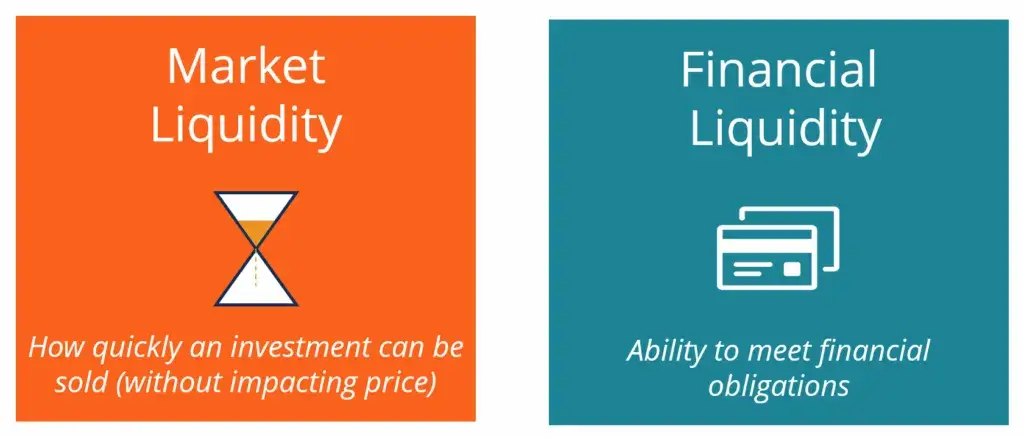
Behrouz Ferdows pointed out that for a stock to be considered liquid, one needs to ascertain its shares is able to be bought and sold quickly and with minimal impact to the stock’s price. According to Canadian regulators, a liquid stock is classified as one that is traded at least 100 times per day and has an average daily trading volume of at least $1 million. Large capitalization or large-cap stocks refer to the shares of companies that are traded on major stock exchanges which tend to be highly liquid.
It is estimated that a company typically needs to have a capitalization of $10 billion or more to qualify as a large-cap stock. They are also normally blue-chip stocks, which have established earnings and revenue. Conventional theory suggests that companies with larger market caps are more likely to have stable prices and a higher volume of traders, which means that the shares can be converted to cash relatively quickly.
Behrouz Ferdows reiterated that liquidity and the accessibility of a market are directly related. Traditionally, commodity markets were viewed as significantly less liquid than other markets since the physical delivery of assets made them challenging to reflect. But with the rise of derivative products — including CFDs, futures, ETFs and ETNs — it is more straightforward as well as easier to trade commodities than ever before.

