
The idea behind this initiative did not begin in a conference room or an institution. It began with a simple observation.
While watching documentaries about different regions of the world, I noticed a striking contrast. In some places, communities struggled with poverty, limited access to technology, and a lack of opportunities. In other places, resources, expertise, innovation, and investment were available. Yet these capacities often remained disconnected from the people who needed them most.
This led me to ask a simple question:
Why do needs and opportunities still fail to find each other in a world that has never been more connected?
Today, technology allows us to communicate across continents within seconds. Information travels faster than ever before. People can learn about different cultures, countries, and communities without leaving their homes. Yet despite these advances, many challenges remain unresolved because meaningful connections are still missing.
In my view, one of the greatest challenges facing the world today is not only the shortage of resources, but the shortage of effective human connection.
When researchers cannot find the communities that need their knowledge, when entrepreneurs cannot identify opportunities for meaningful investment, and when talented individuals remain isolated from global networks, opportunities are lost.
If I had the opportunity to focus on one challenge, I would begin with developing countries, particularly regions where access to technology, education, and economic opportunities remains limited.
Technology is not only about advanced machines. It includes every tool, idea, or innovation that improves human life. Better education, stronger communication systems, sustainable agriculture, healthcare solutions, and entrepreneurship can all contribute to long-term development.
However, development should not be viewed as a one-way process where one side gives and another side receives. Every country possesses valuable strengths. Some have research capabilities, some have investment capacity, some have industrial knowledge, and others have local experience, cultural heritage, traditional skills, and unique perspectives.
Real progress begins when these strengths are connected.
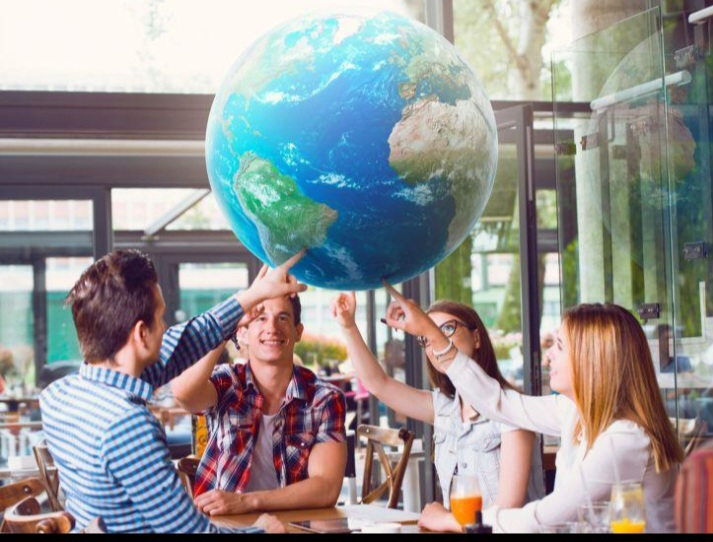
Imagine a researcher from Europe, an entrepreneur from Asia, and a student or community representative from Africa sitting at the same table. The researcher contributes knowledge and expertise. The entrepreneur brings business experience and investment opportunities. The local participant shares practical realities, challenges, and insights that cannot be learned from reports alone.
Together, they can create something new—an idea, a project, a partnership, or an innovation that none of them could have developed independently.
Another important lesson is that progress requires effort, curiosity, and research. Economic development depends not only on resources but also on people who are willing to explore new possibilities and test new ideas.
Students, researchers, and future leaders should think beyond traditional frameworks. Understanding markets is important, but it is equally important to identify unmet needs, discover hidden opportunities, and build bridges between people, knowledge, and resources.
The question is no longer whether connection is possible.
The real question is how we can use those connections to create value, opportunity, and a better future for communities around the world.
Perhaps the future of development is not about helping others from a distance.
Perhaps it is about helping people, knowledge, and opportunities find each other.
Discussion Question
If you could connect one global need with one global opportunity, what would it be?
#GlobalDialogue
#EconomicDiplomacy
#PeopleToPeople
#InternationalDevelopment
#GlobalCooperation
#HumanCenteredDevelopment
#ResearchAndInnovation
#KnowledgeSharing
#SustainableDevelopment
#AfricaDevelopment
#FutureOfCooperation
#OpportunityCreation
Yalda Taherzadeh
Founder, Global Dialogue & Economic بیشتری🌷

