
DataStage comprises one or more stages for each of the four parallel DataStage jobs we have that link to the STAGE DB database. To add connection information and link to the dataset files that DataStage pops up, you need to change the levels.
Stages have editable, predefined properties. Here we must adjust some of these properties for parallel job extracting STAGEDB ASN PRODUCT CCD.
Step 1
View the repository tree by Architect. Pick the parallel job under SQLREP folder STAGE DB ASN PRODUCT CCD extract. Only right-click the job to delete. The parallel work configuration window opens inside the Designer Palette. Data stage online course helps you to learn more skills and techniques.
Step 2
Find the icon in green. This icon represents the stage for the DB2 connector. It is used for CCD table data extraction. Double-click on the button. A window for the Stage Editor opens.

Step 3
Click Load to fill in the fields with information about the link in the Editor. Select OK to close the scene editor and save your changes.
Step 4
Return to the concept window for the parallel job remove STAGE DB ASN PRODUCT CCD . Locate the icon for the connector stage in getSynchPoints DB2. Double-click then on the button.
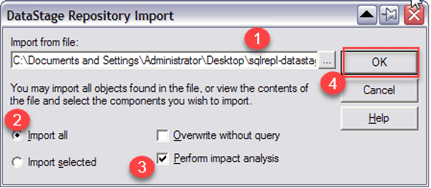
Step 5
Now press the Load button to fill in the fields with the details about the link.
NOTE:
When you are using a non-STAGE DB database as your Apply Control Server. Then select the option for the getSynchPoints stage to load the link information, which interacts with the control tables rather than the CCD table.
Step 6
In doing so, Render an empty text file with InfoSphere DataStage running on the machine.
Title this file as product dataset.ds, and note where it was saved.
After it gets changes from the CCD table, DataStage can write changes to that register.
Data sets or files are known as persistent data sets and are used to transfer data between related jobs. It is expressed through a stage in DataSet.
Step 7
Now open the Layout window stage editor and double-click the Insert into a dataset button.

Step 8
This window includes, Under the tab Properties, make sure the Target folder is open and highlights the property File = DATASETNAME.
Then you can find the range of files to the right.
Access the product dataset.ds file in complete path
Select the 'OK' button.
All required properties for the product CCD table have now been revised. Close the Development window and save all modifications.
Step 9
Now find and open the parallel job STAGE DB ASN INVENTORY CCD extract from the Designer repository pane and repeat Steps 3-8.
PLEASE NOTE:
For the get Synch Points stage you must load the link details for the control server database into the stage editor. If you don't have a control server STAGE DB. Datastage administrator training helps you to learn more effectively.
Open all DB2 connector stages for the parallel jobs STAGE DB ST00 AQ00 getExtractRange and STAGEDB ST00 AQ00 markRangeProcessed. Then use the load feature to add STAGE DB database link details
The DataStage jobs are compiled and run
The Architect validates the job specification by looking at inputs, transformations, expressions and other information when DataStage work is ready to compile.
Once the job compilation is successfully finished, it is ready to run. We can compile all five jobs, but only run the "job chain" That is because all four parallel workers are regulated at this job.
Step 1
Under folder SQLREP. Select by (Ctrl+Shift any of the five jobs. Then click right and choose the option Multiple work compile.
Step 2
In the DataStage Compilation Wizard you will see 5 jobs picked. Tap Then.
Step 3
Compilation starts and a "Compiled successfully" message is shown until complete.
Step 4
Now launch DataStage and the Director of Quality Stage. Select Start > All programs > IBM Information Server > IBM Web Sphere DataStage and the Director for Quality Stage.
Step 5
Navigation pane of the project to the left. Tap on tab for SQLREP. This puts all five positions into the status table for the manager.
Step 6
Choose the sequence job STAGE DB AQ00 S00 . Tap Job > Run Now, from the menu bar.
If the compilation is completed, the finished status will be revealed.
Now test if modified rows stored in the tables PRODUCT CCD and INVENTORY CCD have been extracted by DataStage and inserted into the two files set for the data.
Step 7
Go back to the Designer and open the extract job for STAGE DB ASN PRODUCT CCD. To open the Stage Editor, double-click the insert in the Data Set icon.
Then press the Data button.

Step 8
Acknowledge the defaults in the window to view rows. Then, just press OK. A browser window will open to view data set file contents.
Checking the Database Replication and DataStage integration
We compiled and executed the work in the preceding step. In this portion, we'll test SQL Replication and DataStage integration. We must make changes to the source table for that, and see if the same change is applied to the DataStage.
Step 1
To navigate to your operating system's sqlrepl-datastage-scripts tab.
Step 2
Continue SQL Replication with steps like:
To start the Capture program at the SALES database run the startSQLCapture.bat (Windows file.
In the STAGE DB database, run the startSQLApply.bat (Windows file to start the software program.
Step 3
Now open a file called updateSourceTables.sql. Replace < sales-connect-ID > and < sales-password > with User ID and password to link to the SALES database.
Step 4
Open a window with the command DB2. Change directory to sqlrepl-datastage-tutorial\scripts, and use the given command to run problem:
In the Sales database, the SQL script can perform various operations such as reviewing, adding, and deleting on both tables (PRODUCT, INVENTORY.
Step 5
On the machine which runs DataStage. Open the DataStage Director and perform the sequence job STAGE DB AQ00 S00 . Tap Task > Run Now.
Following activities will be carried out when you are running the job.
The Capture program reads and inserts the six-row changes in the SALES database log into the tables on the CD.
The Apply program gets the shift rows from the SALES CD tables and incorporates them into the STAGEDB CCD tables.
The two DataStage extract jobs pick up the changes from the CCD tables and copy them to the files of product dataset.ds and dataset.ds inventory.
You can take a look at the data sets to verify that the above steps took place.
Step 6
Refer to the steps below,
Start Designer. Open the job of extracting STAGE DB ASN PRODUCT CCD .
Then double-click on the icon Insert into a dataset. In the Editor for the point. Click The Data View.
Accept the defaults in the display window line, and click OK.
The dataset has three new rows in it. The easiest way to check the changes is to scroll down the Data Explorer far to the right. Look now at the last 3 rows (see picture below
The letter I, U and D specifies the operation INSERT, UPDATE , and DELETE which resulted in each new row. The same search can be done for Inventory table
Conclusion
I hope you reach to a conclusion about DataStage employment properties and compilation. You can learn more through DataStage online training.

